
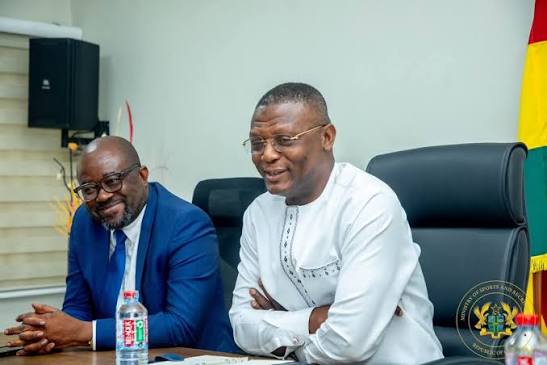

After a high-stakes, “crunch meeting” between high-ranking officials from the Ministry of Sports and Recreation and leadership of the Ghana Football Association (GFA), a set of seven key directives has been issued to restructure and reform the management and operations of national football teams. These decisive actions, seen as a significant intervention in the country’s football administration, aim to restore order, efficiency, and a culture of collaborative decision-making between the government and the GFA.
This major development, marks a critical turning point in the governance of Ghanaian football, addressing long-standing concerns about performance and accountability across all national team levels, from the senior Black Stars to youth setups.
The seven directives collectively form a blueprint for immediate reform and establish a new framework for oversight and resource management.
They are:
* Immediate Dissolution of Key Committees: The existing Black Stars technical team, alongside all national team management committees, has been dissolved with immediate effect. This sweeping measure is intended to facilitate a fresh start and the implementation of a streamlined administrative structure.
* Creation of a New National Technical Management Committee: To fill the void left by the dissolution, a powerful new body, the National Technical Management Committee, is to be established. In a significant move towards joint oversight, this committee will be comprised of four members: two government-appointed experts and two nominees from the GFA. This structure ensures equal representation from both the Ministry and the Football Association.
* Strict Consultation Mandate for Black Stars Coach Appointment: The GFA is expressly forbidden from unilaterally appointing the next head coach of the Black Stars. A key directive mandates that the selection process must be conducted in consultation with the newly formed National Technical Management Committee. This move aims to bring a wider range of expertise and a more collaborative approach to the critical task of choosing the national team’s leader.
* Consolidation and Streamlining of Management Committees: The fragmented system of national team management committees will be replaced by a lean and focused structure. Only two core management committees will now operate: one dedicated to men’s football and one to women’s football. This simplification is expected to improve communication and decision-making efficiency.
* Restoration of State Accommodation for Head Coach: In a push towards professionalism and proper support for technical leadership, a directive has been issued to restore State-provided official accommodation for the national team’s head coach. This measure aims to address practical concerns and improve working conditions.
* Government-Led Selection for Youth Development Coaches: In another major shift, the government is asserting greater control over the foundational levels of Ghanaian football. A directive states that the government will participate in selecting development coaches for the U15, U17, and U20 national youth teams. The overarching goal is to consolidate the national youth team structure, creating a clear and consistent pathway for talent development.
* Formalization of Joint Decision-Making: Finally, a fundamental restructuring of the relationship between the GFA and the Ministry is to be codified. A directive calls for the conclusion and signing of a FIFA standard cooperation agreement. This official document will formalize and enforce joint decision-making processes, creating a long-term framework for collaboration and dispute resolution.
These decisive interventions signal a strong determination from the Ministry of Sports and Recreation to actively shape the future of Ghanaian football. By mandating increased consultation, streamlining administration, and asserting oversight over key appointments, the government aims to address core governance issues.
The successful implementation of these 7 key directives will be a significant step towards a more accountable, collaborative, and ultimately, more successful era for national football in Ghana. Observers and fans will be watching closely to see how the GFA responds and how these changes impact performance on the pitch.