
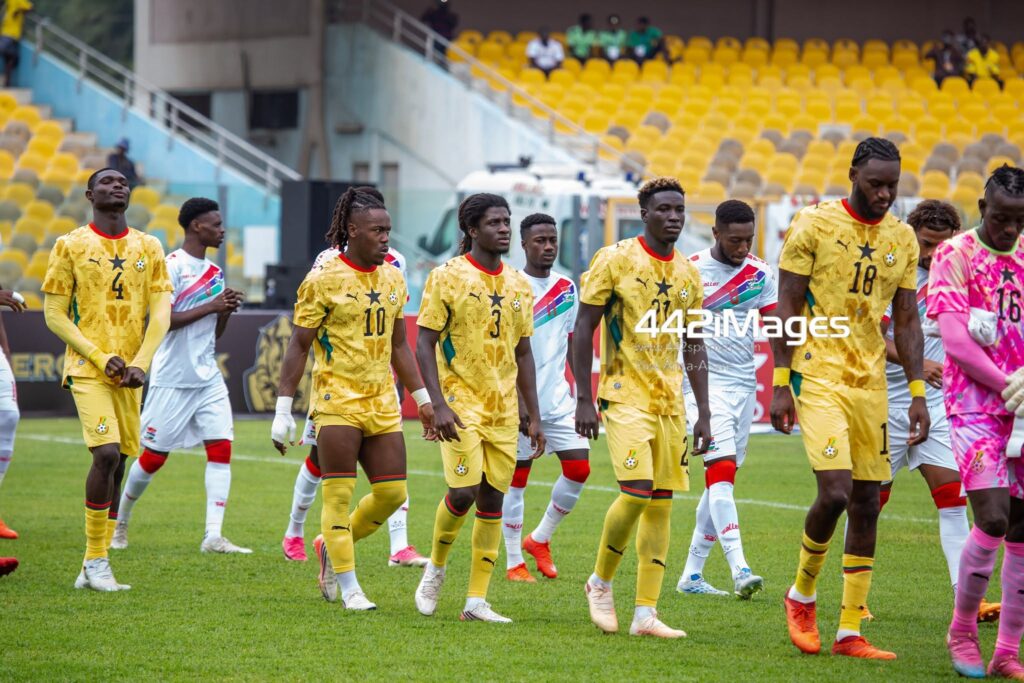

For nearly seven years, Kurt Edwin Simeon-Okraku has presided over Ghana football. Elected GFA president in October 2019 as a self-styled “Game Changer” and re-elected in 2023 under the banner “Bring Back the Love”, he has overseen an era in which commercialisation has become one of the defining features of the Football Association’s agenda.
There are now more sponsors, more partnerships, more branded competitions and more commercial properties across the football pyramid.
The Ghana Premier League has secured a major broadcast partnership. Premier League clubs received GH¢1 million each before the 2025/26 season. The Women’s Premier League has attracted Gold Fields and KFC, the Division One League has secured UMB, the Colts competition has Kivo Ghana and JLAB, while the GFA has entered into partnerships with brands such as MTN, KFC and X1.
The GFA describes this as evidence of a football industry becoming commercially stronger.
But there is another measure of football development that cannot be captured by sponsorship announcements.
The scoreboard.
Recent analysis of Ghana’s senior men’s national-team record shows that the Black Stars have won only 39.3 per cent of their 56 competitive matches under Okraku, averaging 1.46 points per game. Across 74 matches, including friendlies, the win rate falls to 35.1 per cent. The competitive figures are the lowest among the seven GFA administrations examined in the analysis.
That contrast raises the central question of the Okraku era:
Has the commercialisation of Ghana football advanced faster than the development and performance of its national teams?
A New Business Model
There is little doubt that Okraku has made commercialisation central to the GFA’s strategy.
At the Association’s 2026 Congress, Okraku celebrated what he described as growing confidence from Corporate Ghana. The GFA announced new commercial agreements covering Colts football, women’s football, the Division One League and other competitions.
The Premier League has become a particularly important commercial property. Under the 2025 broadcast agreement with Adesa Productions, each of the 18 Premier League clubs was guaranteed at least GH¢1 million per season, alongside increased investment in television production, marketing and radio commentary.
For an industry that has historically struggled with weak club finances, these developments matter.
But commercialisation is ultimately a means, not the end product.
A league can have sponsors, television coverage and branded competitions and still fail to produce strong national teams.
That is where the Okraku record becomes more complicated.
When the National Team Became the Product
The Black Stars have traditionally occupied a special place in Ghanaian football.
They are not simply another team under the GFA. They are the country’s most visible football institution, the principal vehicle for national sporting identity and arguably the Association’s most valuable commercial asset.
The Black Stars’ image, players, matches and intellectual property have all become part of the commercial ecosystem.
In 2026, for example, KFC became the GFA’s Official Meal Partner, with its branding extending to Black Stars home matches and GFA platforms. The agreement also allows the company to use Black Stars intellectual property for collectibles and merchandise.
X1 was also announced as the Black Stars’ official performance partner under a five-year agreement.
MTN committed $2 million to support four national teams, including the Black Stars, Black Queens, Black Satellites and Black Starlets. Okraku himself acknowledged that modern football requires substantial corporate backing.
The commercial machinery around the national teams, therefore, has not disappeared.
It has expanded. The uncomfortable question is whether sporting performance has expanded with it.
The answer from the results is difficult to ignore. Ghana failed to win a match at the 2021 AFCON. The team again failed to win at the 2023 tournament. Then came the failure to qualify for the 2025 AFCON, ending Ghana’s 20-year sequence of appearances at the competition.
Meanwhile, the competitive win rate under Okraku stands at 39.3 per cent. This creates an unusual contradiction.
The Association can point to increasing commercial confidence in Ghana football, while the national team that carries the strongest Ghana football brand has struggled to convert that commercial momentum into consistent results.
The issue is not that sponsorship causes poor performance. There is no basis for such a claim.
The issue is whether commercial success has become too easily accepted as evidence of footballing progress.
More Sponsors, More Questions. The expansion of sponsorship is visible across almost every level of the game.
The GFA says Corporate Ghana is now investing in the football pyramid rather than concentrating only on the top division. Kivo Ghana supports Colts football; Gold Fields backs the Women’s Premier League; UMB sponsors Division One; XI Energy supports the Division One Super Cup; and KFC has entered the women’s game and national-team ecosystem.
This is potentially transformative.
But sponsorship should eventually produce something measurable beyond visibility.
Better facilities.
Better player development.
Better coaching.
Better medical systems.
Better scouting.
Better preparation for national teams.
And ultimately, better results.
The question for the GFA is therefore not how many corporate partners it has attracted.
It is what those partnerships have produced on the pitch.
The Selection Debate
The commercialisation question also intersects with another persistent controversy: who gets access to the national teams.
Former youth international Najeeb Yakubu alleged that his national-team career suffered after he declined an opportunity to join Dreams FC, a club historically associated with Okraku. He alleged that his passport was removed before a 2021 Black Meteors trip to Japan.
The allegation has not been independently established, and Okraku has denied interfering in national-team selection.
In 2021, he said, “Nobody imposes players on Charles Akonnor,” insisting that selections followed the established technical process.
The significance of the allegation is therefore not that it proves interference. It is that it illustrates the level of suspicion surrounding national-team selection when football administration, club interests and personal relationships intersect.
The same question hangs over Still Believe FC, a club linked to Dreams FC and Okraku, while Vision FC has also featured in discussions around individuals associated with the GFA presidency.
In football, perception matters almost as much as procedure.
If stakeholders believe proximity to the centre of power improves access to opportunities, the credibility of the system suffers even where individual allegations cannot be proven.
The Cost of Commercial Football
Commercialisation itself is not the problem.
Modern football cannot survive without it.
The Premier League needs broadcasters. Clubs need sponsors. Women’s football needs investment. Youth football requires funding. National teams require preparation money.
The concern is what happens when commercial activity becomes the most visible evidence of institutional success while sporting outcomes become secondary.
A football association can announce a new partnership every few months.
But supporters ultimately judge the Black Stars by qualification, victories and tournaments.
They remember AFCON failures.
They remember early exits.
They remember missed opportunities.
They remember the feeling that a once-feared national team has become unpredictable.
That is why the 39.3 per cent competitive win rate matters. It provides a counterweight to the increasingly commercial narrative of the Okraku presidency.
The Other National Teams
The picture is not uniformly negative.
Ghana’s youth teams have recorded successes during the period. The Black Satellites won the 2021 U-20 AFCON and the 2023 African Games, while the Black Starlets returned to the U-17 AFCON. The GFA has also secured investment aimed specifically at youth development and national-team performance.
Indeed, the GFA’s $2 million MTN partnership covers four national teams, while the X1 agreement specifically targets performance support.
These developments suggest that the commercial model can support sporting development.
The unresolved question is whether the investment is sufficiently coordinated to produce sustained success at senior level.
The Spiritual Explanation
And then there is the language of spirituality.
When Ghana’s national teams struggle, the conversation frequently turns to prayer, curses and spiritual attacks.
In May 2026, the GFA and the Sports Ministry organised a national thanksgiving and prayer service for the Black Stars’ World Cup campaign.
Prayer is part of Ghana’s football culture. But it cannot substitute for technical planning, player development, transparent selection and institutional accountability.
The temptation to search for spiritual causes can distract from questions that have much more tangible answers.
Who selects the players?
How are coaches appointed?
How are national-team programmes funded?
How are players scouted?
How are commercial revenues translated into technical development?
And how is the GFA measuring success?
The Okraku Paradox
This may ultimately be the paradox of the Okraku era.
The business of Ghana football appears to be becoming bigger.
The brand portfolio is expanding.
Corporate Ghana is becoming more involved.
Domestic clubs are receiving larger financial injections.
Competitions are acquiring commercial identities.
Broadcasting is becoming more sophisticated.
Yet the country’s flagship national team has produced a competitive win rate of less than 40 per cent during the same presidency.
The GFA can legitimately argue that commercialisation provides the resources needed to rebuild Ghana football. And the evidence shows that the Association has attracted significant corporate investment.
But the ultimate test of that model will not be the number of sponsors printed on jerseys, stadium boards or competition logos.
It will be whether Ghana can consistently turn money, partnerships and infrastructure into players, teams and victories.
For now, the Okraku era presents two very different scorecards.
On the commercial side, the game is expanding.
On the national-team side, the results remain deeply contested.
And that leaves Ghana football facing its most important question yet:
Is the game being commercialised to develop Ghanaian football—or has the business of football gradually become more important than the football itself?